If you smell rotten eggs near a gas stove, furnace, meter, or anywhere else in your home, don’t wait to see whether the odor gets stronger. Take everyone outside, move away from the building, and call 911 or your gas utility’s emergency number from a safe location. A faint smell still warrants a call. Gas utilities treat suspected leaks as emergencies, and you don’t need to find the source before reporting one.
The part that’s easy to get wrong is what happens on the way out. Don’t flip a light switch, use your phone inside, start a car in the garage, or stay to open windows. Any action that could create a spark—or simply delay your exit—is best left alone.
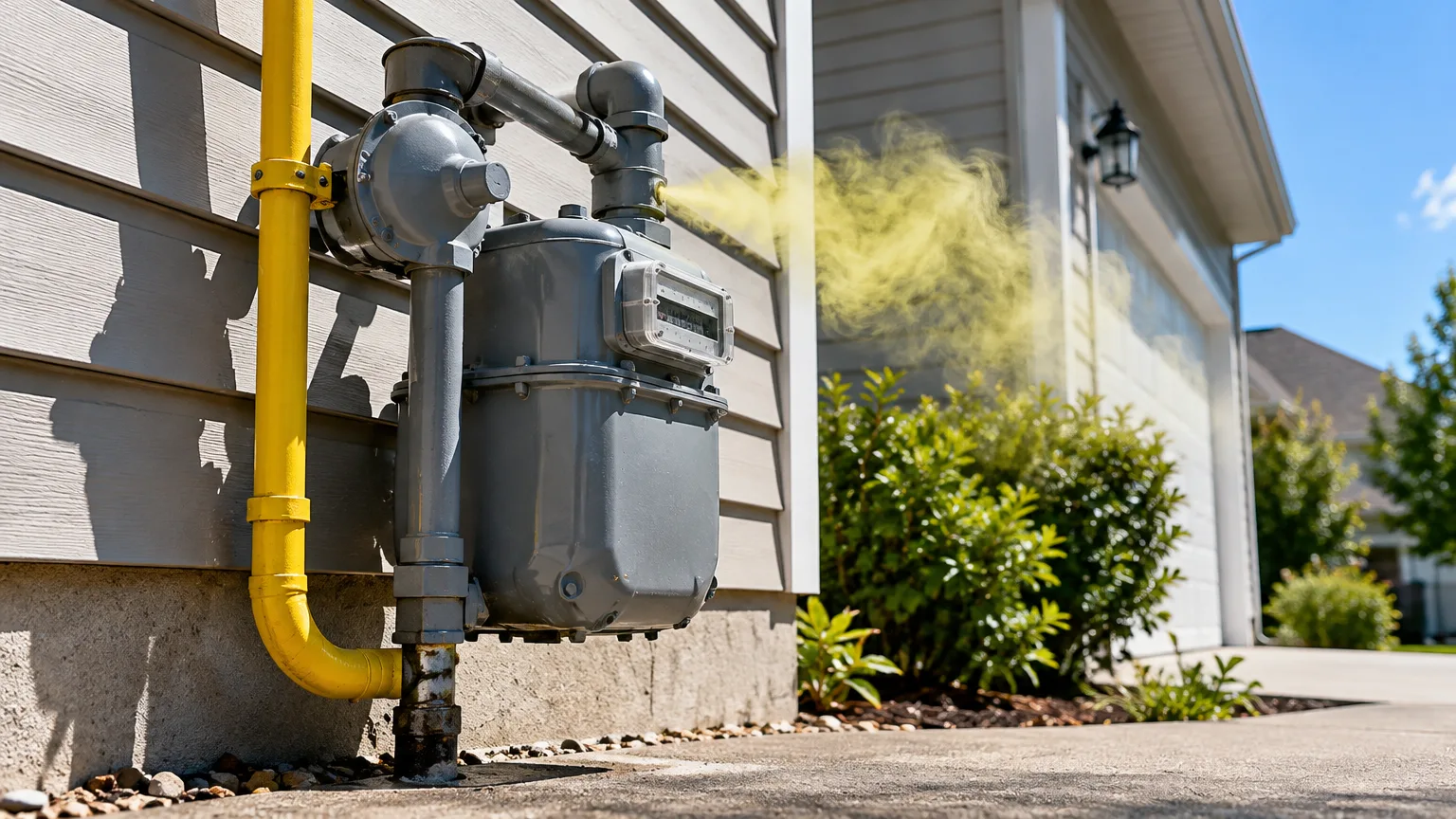
Warning signs of a natural gas leak
Natural gas has no smell on its own. Utilities add an odorant to the gas delivered through distribution systems so leaks are easier to detect. People often describe the smell as rotten eggs or sulfur. You might notice it in one room, near an appliance, beside the outdoor meter, or along a sidewalk. You may also hear hissing or whistling near a gas connection; a larger release can make a roaring sound.
Outside, bubbling in standing water, dirt blowing from the ground, or an unexplained patch of dead plants can signal a buried pipeline leak. None of those signs proves gas is present, but none is something to inspect up close. Move away and report what you noticed.
Don’t use your nose as an all-clear test. The added odor can become less noticeable under some conditions, including when gas travels through soil or building materials. If you hear escaping gas or see another warning sign, the absence of a strong smell does not rule out a leak. Likewise, an odor that comes and goes should still be reported rather than dismissed because it faded.
What to do immediately if you suspect a leak
- Leave at once. Tell others to come with you and walk out using a normal exit. If you’re outdoors, move away from the suspected leak rather than toward it. Don’t stop to find the source, collect belongings, or go back for a closer look.
- Avoid anything that could ignite gas. Don’t smoke, light a match, use a flashlight, operate electrical switches, unplug devices, ring a doorbell, or use an automatic garage-door opener. Don’t start a vehicle near the suspected leak. Leave doors and windows as they are instead of staying inside to air out the space.
- Call from well away from the area. Once you’re safely outside and away from the building, call 911 or your gas utility’s emergency line. If you don’t know the utility’s number, call 911. Give the address, what you smelled, heard, or saw, and whether anyone may still be inside. Don’t use a phone while you’re in the area where you suspect gas is present.
- Keep clear until responders say it’s safe. Warn others not to approach if you can do so from a safe place. Don’t reenter because the smell has disappeared or because you think you found the cause; wait until emergency responders or utility personnel clear the area for reentry.
If you see a gas fire, move away and call 911. Don’t try to extinguish it or operate a pipeline valve; trained responders need to handle both the fire and the flow of gas.
Leave the meter and repairs to trained personnel
Turning off the gas supply can sound like the quickest fix. In a suspected leak, though, approaching a meter or searching for a shutoff may take you closer to escaping gas and delay evacuation. Don’t try to tighten a fitting, test a connection, or relight an appliance. Report the suspected leak and let responders assess it. Follow any specific instructions they give you from a safe location.
The same rule applies if you believe an appliance caused the problem. Tell the utility what you observed, but don’t assume a burner, pilot light, or valve is the only source. The utility can check for gas with appropriate equipment.
What if the smell is outside—or only faint?
An outdoor leak may be near a meter, buried service line, street, or neighboring property. Stay away from the spot, keep other people back if you can do so safely, and call from a distance. Don’t start a nearby vehicle or use powered equipment to investigate. If digging or yard work may have struck a line, stop work and leave the area.
Don’t spend time deciding whether a faint odor is “enough” to report. The strength of a smell isn’t a dependable way to judge the size or danger of a leak, and an odor may be hard to detect. Leave and let the gas utility or emergency responders check it.
A gas leak and carbon monoxide are different hazards
The rotten-egg odor warns of odorized natural gas. Carbon monoxide, or CO, has no smell. It can be produced when fuel-burning equipment operates, including gas appliances. Headache, dizziness, weakness, nausea, chest pain, and confusion are possible signs of CO poisoning; symptoms can become severe without an odor to warn you.
If a CO alarm sounds, or someone has symptoms that may be related to CO exposure, get everyone into fresh air and call 911. Tell the dispatcher about the alarm or symptoms. If you also suspect a gas leak, follow the no-switches, no-phone-inside precautions as you leave.
A standard CO alarm is not a natural gas leak alarm. Some products are designed to detect both, but don’t wait for any alarm to sound when you smell gas or notice another leak sign.
After the immediate danger is over
Wait for the utility or emergency responders to say you may go back inside. If they shut off service, ask what needs to happen before it can be restored. The answer depends on where the problem is: a utility may handle its own equipment, while a problem in privately owned piping or an appliance may require a qualified plumber or technician. Repairs and restoration can require a leak test before service resumes. Don’t turn the gas back on or relight appliances on your own unless the utility specifically instructs you to do so.
For the next project, prevent a different kind of emergency: contact 811 before digging so underground utilities can be marked. Make that call before work begins, not after a line is struck. If you suspect a leak, 811 is not the emergency number—leave the area and call 911 or your gas utility from a safe location.