The best accident photos aren’t necessarily close-ups of the dent. A close-up shows damage, but it may not show which lane each car was in, where the stop sign stood, or how far the vehicles moved after impact. Those details can matter when an insurer pieces together what happened.
You don’t need to investigate the crash yourself. You need to get people safe, collect what you reasonably can, and give your insurer an accurate account while the details are fresh. If you can’t complete every step at the scene, do the safe steps first and fill in the gaps afterward.
First, get out of danger
Stop, check yourself and your passengers for injuries, and call 911 if anyone is hurt. If the car can be driven and it’s safe to do so, move it out of traffic. The National Association of Insurance Commissioners’ accident guidance puts safety ahead of collecting claim information.
Don’t stand in a travel lane to photograph skid marks or the position of a bumper. If you must move the cars before taking pictures, that’s fine: safety comes first. Note where they were before you moved them, and make a simple sketch later if it helps. If a vehicle cannot be moved, tell the emergency dispatcher where it is and follow their instructions.
Stay at the scene long enough to handle the required exchange of information and any instructions from responding officers. If the other driver is threatening or the location feels unsafe, avoid an argument and call police from a safe place.
Record the scene before the details disappear
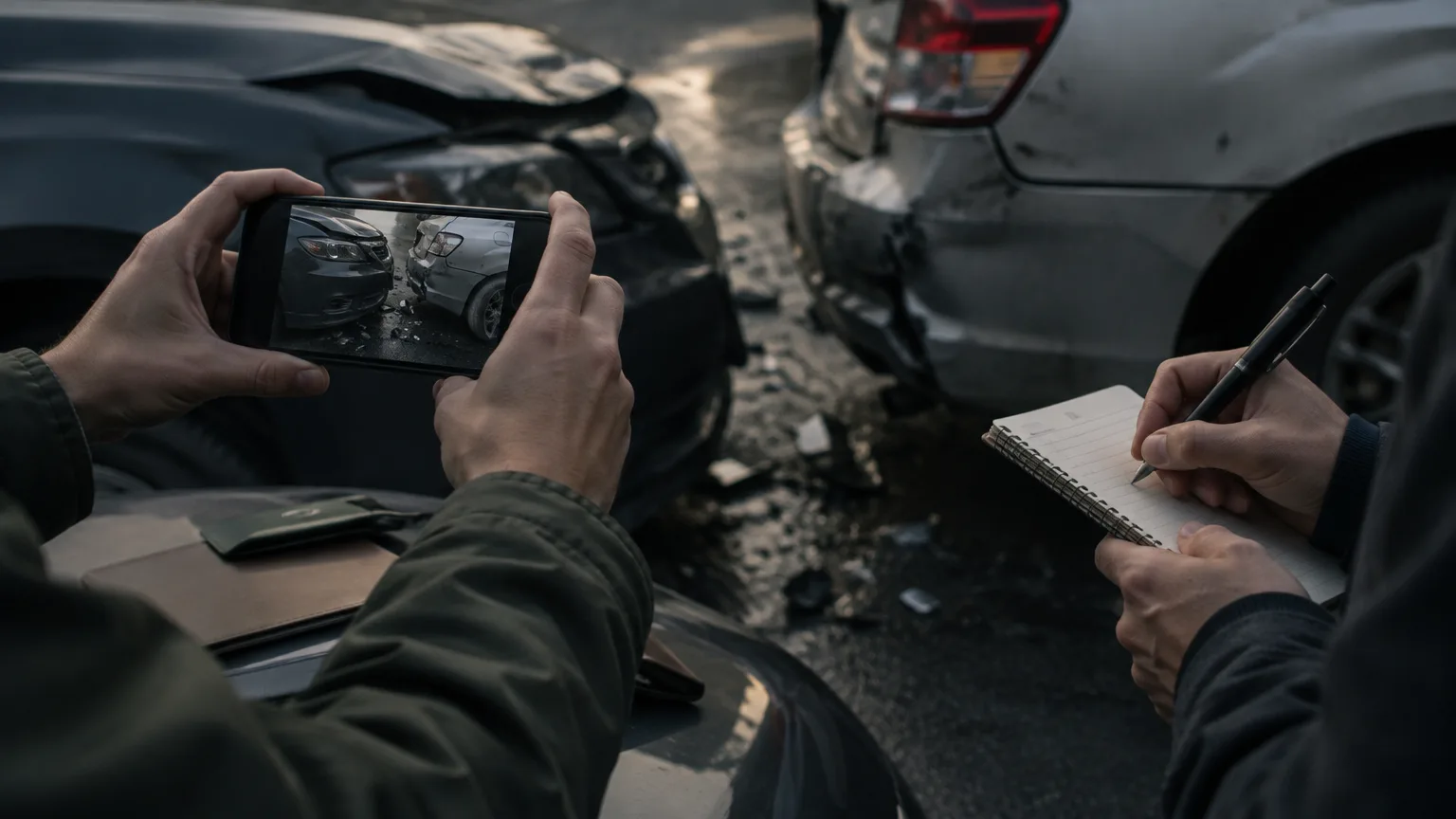
Once it’s safe, take a set of photos that answers two questions: What was damaged? and What did the scene look like? Aim for clear images, not a large collection of nearly identical shots. Photograph:
- All sides of each involved vehicle, then closer views of visible damage.
- License plates and the vehicles together, if they’re still in their post-crash positions.
- The roadway from several safe angles, including lane markings, signs, signals, intersections, driveways, and any blocked views.
- Visible debris, tire marks, damaged barriers, or other property involved.
- Conditions that may change, such as rain, standing water, construction signs, or poor lighting.
Include a wider shot to show where a close-up was taken. If you notice damage later, photograph it before repairs and tell the adjuster when you found it. Don’t move debris or put the cars back where you think they were for a picture.
Write down the date, time, exact location, direction each vehicle was traveling, weather, and road conditions. Add a short description of what you personally saw and did, in sequence. For example: “I was stopped at the light in the right lane; I felt an impact from behind.” Separate observations from guesses about speed, distraction, or fault. If you’re unsure, say so.
Save any dashcam footage promptly, along with the original photos and videos. Make a backup somewhere you can reach if your phone is lost or damaged. Photos help explain a claim, but they don’t replace your written account or the other records you collect.
Exchange information and find witnesses
Get the other driver’s name, phone number, insurer, policy information, and vehicle plate number. Record the car’s make and model, and note if the driver says someone else owns it. Check that the insurance information belongs to the vehicle involved. Provide your own relevant contact and insurance information in return.
Avoid sharing more personal information than needed simply because someone asks for it. The NAIC cautions that, although state requirements vary, drivers generally need not hand another driver a photo of their license. If an officer requests information, follow the officer’s instructions.
If someone saw the collision, ask for their name and a reliable phone number or email address. A useful witness is someone who saw what happened—not just someone who arrived afterward. Briefly note where they were standing or driving and what they say they saw, without coaching them toward an account. If they’re willing, ask whether the insurer may contact them.
If the other driver leaves, don’t pursue them. Record what you remember about the vehicle, plate, direction of travel, and any identifying details, then contact police. If the other driver refuses to exchange information, tell the responding officer or the police department and pass along the details you do have to your insurer.
Ask how to get a report—and check for a separate state filing
Call police when there are injuries, a hit-and-run, a serious collision, or a dispute that needs an officer’s attention. Police response to a minor crash can depend on local practice and where the collision occurred. If officers come, get the officer’s name, agency, report or incident number, and instructions for obtaining the report. If no officer comes, ask the local police department whether you can file an incident report.
Don’t assume a police report will contain every fact you need. Keep your own photos, witness contacts, and notes, and review the report when it becomes available. If you spot an error, ask the agency about its correction or supplemental-report process.
A police report, an insurance claim, and a state motor-vehicle report can be separate tasks. Requirements vary by state. For example, California requires an SR-1 report within 10 days when someone is injured or killed, or property damage exceeds $1,000; that filing is required in addition to a report to police or an insurer. Check the rules for the state where the crash happened rather than assuming a call to your insurer covers every reporting duty.
Tell your insurer promptly, even if the claim seems simple
Once everyone is safe and you have the available information, contact your insurer using the number on your insurance card, its app, or its claims website. You don’t have to wait for a police report. The Insurance Information Institute recommends notifying your insurer as soon as possible, even when a crash looks minor or you believe the other driver caused it. Your policy may also set deadlines for reporting a loss or submitting documents.
Give a factual account: when and where the crash happened, who was involved, whether anyone reported an injury, what damage you can see, whether police responded, and how to reach witnesses. Upload photos and documents as the insurer requests. If you don’t know an answer, don’t guess; tell the claims representative you’ll check and follow up.
Before the call ends, ask for the claim number and the adjuster’s contact information. Then clarify:
- What photos, forms, reports, or other documents should you send, and when?
- Does the insurer need to inspect the car before repairs begin?
- How should you arrange a tow, storage, or rental car, and what might your policy cover?
- If you’re claiming damage to your own car, which coverage may apply and what deductible would you owe?
- When should you expect the next update?
You may be able to pursue vehicle damage through your own collision coverage, if you have it, or through the other driver’s insurer when their driver is responsible. Those paths can differ in timing and out-of-pocket costs. For a small repair, it helps to understand how your car insurance deductible works before deciding how to proceed. Your adjuster can explain the process available under your policy without requiring you to settle the question of fault at the roadside.
Keep one claim file as costs and information come in
After you leave the scene, put everything in one folder: original photos and video, your notes, the other driver’s information, witness contacts, report numbers, emails, estimates, and receipts. Keep a simple call log with the date, person’s name, and what was discussed. This makes it easier to answer an adjuster’s follow-up question without relying on memory.
Save towing and storage receipts, repair estimates and invoices, and rental-car paperwork. Ask the insurer about its inspection process before authorizing nonemergency repairs; if you must take steps to prevent further damage, document the condition first and keep the receipts. Tell the adjuster if a repair shop finds damage that wasn’t visible in the first estimate rather than assuming the original estimate covers it.
People need records, too. If you seek medical care, keep visit summaries, bills, and a dated note of symptoms and missed work. Don’t declare yourself uninjured for claim purposes just because you feel fine at the scene: concussion symptoms can appear hours or days later. Seek medical advice for new or worsening symptoms, and get emergency help for severe warning signs such as repeated vomiting, worsening headache, confusion, or loss of consciousness.
The aim isn’t a perfect file assembled at the roadside. It’s a reliable account built in order: protect people, capture what may change, report what you know, and keep the records that show what happened afterward.
Disclaimer
This article provides general insurance information, not legal or medical advice. Reporting duties, coverage, and claim deadlines depend on your state and policy; seek professional help for injuries or legal questions.