A gas appliance installation isn’t finished when the new range lights or the water heater makes hot water. The installer also needs to confirm that the appliance matches the fuel supply, the connections don’t leak, and any required venting works. If the job needs a permit, someone must arrange the inspection and close it out.
That makes hiring less about finding a person who can connect a hose and more about finding a contractor who will own the entire job. If you already smell gas or suspect a leak, put the installation plans aside: follow the steps in what to do immediately when you notice warning signs of a natural gas leak before contacting installers.
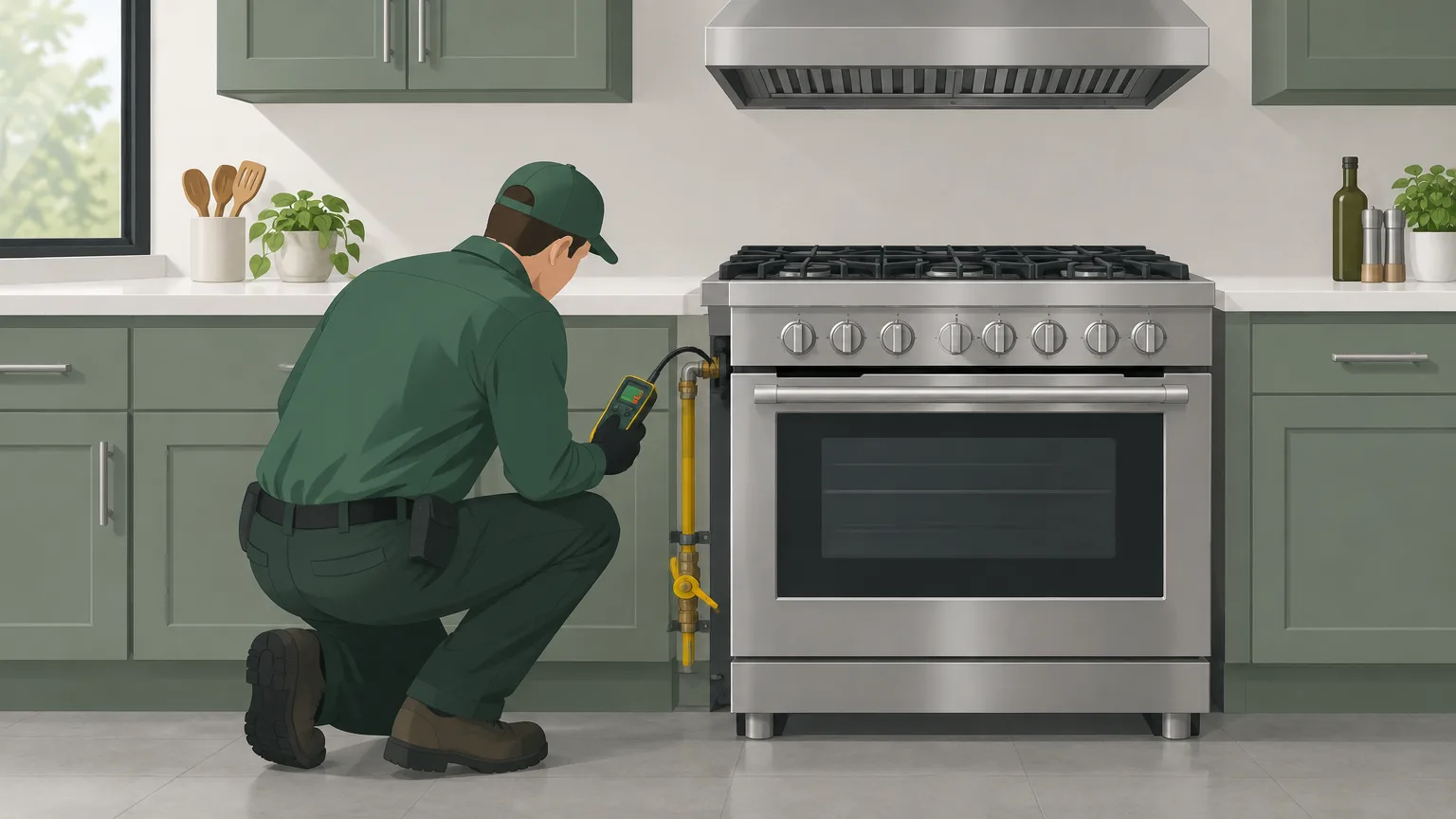
Match the installer to the work
Start by describing the job precisely. “Replace a gas range in the same spot” is different from “move the range across the kitchen and extend the gas line.” A furnace replacement may involve gas piping, venting, electrical connections, ducts, and controls. A water heater may also involve water piping and a new vent route. The person qualified to deliver the appliance may not be qualified to perform all of that work.
Ask each candidate: “What license or registration does this work require at my address, and who will perform each part?” The answer depends on the state and local jurisdiction. Massachusetts, for example, licenses plumbers and gas fitters; New York City requires gas work to be performed by a licensed master plumber or by appropriately qualified people under the required supervision. “Licensed gas fitter” is useful shorthand, but it isn’t a universal U.S. license title.
A crew can include apprentices or other employees without every person holding the same license as the contractor. What matters is whether each person’s work and supervision meet local rules. Ask for the name of the license holder responsible for the job—not just the name of the salesperson who prepared the quote.
For propane, confirm experience with propane equipment specifically. A natural-gas appliance is not automatically suitable for propane; some models require a manufacturer-approved conversion performed by a qualified professional. A disconnected line must be properly capped or plugged, even if a replacement appliance isn’t going in immediately.
Verify credentials with the issuer
Get the contractor’s legal business name, the responsible license holder’s name, the license number, and the license type. Then check the issuing state or local agency yourself. Match the number to the person or business, confirm its status, and check that the credential covers the proposed work. For instance, Philadelphia’s contractor lookup lets residents check actively licensed contractors and licensing violations.
Don’t treat a trade association membership, training certificate, manufacturer badge, or online review as a substitute for a required license. These may tell you something useful about a contractor’s experience, but they answer a different question. If a credential is unfamiliar, verify who issued it and what it actually represents before giving it weight.
Ask for proof of liability insurance and, if a crew will be working in your home, ask about workers’ compensation coverage. Check references for jobs involving the same kind of appliance and scope, especially when the bid includes a new gas line or vent. The Federal Trade Commission recommends checking licenses and insurance, getting multiple written estimates, and making sure the contract identifies the contractor and the work promised.
Settle permits before anyone starts
A permit question needs an answer tied to your address and scope—not “We never need one for these.” Rules differ for a like-for-like appliance swap, a new gas connection, altered piping, and vented heating equipment. Portland lists gas-piping work and changes to vented systems among projects needing a residential mechanical permit; Philadelphia identifies covered gas equipment while also listing exceptions for some work. Neither city’s rule tells you what applies elsewhere.
Ask the installer to identify:
- Which permits, if any, the full job requires, including gas, mechanical, plumbing, or electrical work.
- Who will apply, pay the fees, and be named on each permit.
- Which inspections are required, who will schedule them, and who will correct any failed inspection.
- When the appliance may be put into service and how you’ll receive proof of final approval.
If the contractor says no permit is needed, ask why. For a significant job or an unclear answer, call the local building department with the appliance type and exact work description. Be wary of an installer who asks you to obtain a permit as an owner-builder simply to keep the contractor’s name off the filing.
A permit isn’t the same as a passed inspection. New York City, for example, describes required inspections and final sign-off for permitted plumbing work. Find out what “complete” means in your jurisdiction before making the final payment.
Compare bids by what they include
Give bidders the appliance model, fuel type, installation location, and any known changes to piping or venting. Invite them to inspect the site before quoting complicated work. A low price based on “hookup only” isn’t comparable to a proposal that includes a new shutoff, piping changes, vent work, testing, permits, and inspection follow-up.
The written quote should identify the model or installation specifications, who supplies the appliance and materials, what will happen to the old unit, and which repairs are excluded. It should also say how unexpected work will be priced. An installer may discover that an existing line, vent, or location won’t support the proposed appliance; you want a priced change order, not an improvised connection.
For a furnace, ask how the contractor selected its size rather than accepting the old unit’s rating as the answer. ENERGY STAR warns that oversized equipment can cycle too often and calls for sizing based on the home’s actual characteristics. For a range or dryer, focus the site discussion on the available connection, location, clearances, and the appliance’s installation instructions.
Put the permit and closeout duties in the contract. A practical payment schedule leaves a final balance until the promised work, test results, and required inspection sign-off are delivered. Don’t confuse a utility visit, a contractor’s startup check, and a building-department inspection; one does not necessarily replace another.
Ask what will be tested at startup
Installers call the first operating checks “commissioning.” It should be a deliberate part of the job, not a quick demonstration that a burner ignites. Ask the contractor to explain which tests apply to your appliance and what results they’ll record.
The gas connection must be checked for leaks before use. Depending on the work, testing may include a new or altered section of piping as well as the final appliance connections. A Rheem gas water-heater installation manual requires leak testing before operation and warns against using an open flame to look for leaks. The contractor should follow the instructions for your actual model, not borrow test settings from a different appliance.
For a furnace or vented water heater, ask how the installer will check combustion air, vent connections, startup operation, and any model-specific gas-pressure or combustion measurements. A vent problem can put combustion gases inside the home even when the appliance appears to run. The U.S. Department of Energy recommends combustion-safety testing after gas or propane equipment is installed. For an appliance that relies on a chimney or shared vent, ask whether the existing vent is suitable for the new unit.
Also expect a walkthrough: where the appliance shutoff is, what normal operation looks like, what maintenance the manufacturer calls for, and whom to call if something fails. A carbon monoxide alarm is an important safeguard, but it does not replace proper installation or testing. The Consumer Product Safety Commission recommends CO alarms on each level of the home and outside sleeping areas.
Keep the closeout records
Before the installer leaves—or as soon as the jurisdiction issues its final sign-off—collect the invoice, appliance model and serial number, installation and warranty information, permit number, inspection result, and any startup or test sheet the contractor agreed to provide. Keep them together. They make it easier to identify exactly what was installed and what was checked if the appliance later needs service.
Don’t accept “the inspector will come sometime” as the end of a permitted job. Ask for the scheduled inspection date or a way to check its status, and agree on who will arrange access. If an inspection finds a problem, the contractor should explain the correction and arrange the follow-up required to close the permit.
The strongest hire is the installer who can name the responsible license holder, explain the permit path for your address, describe the startup checks for your specific appliance, and put those duties in writing. If a bid skips those steps, its price isn’t telling you the full cost of a finished installation.
Disclaimer
This article provides general safety and permit information, not a determination of requirements for a specific property. Confirm local rules with your building department and use appropriately qualified professionals for gas work.